
In the realm of industrial and commercial climate control, the Commercial Air Cooler Floor Standing Air Conditioner has emerged as a game-changing solution for expansive environments where traditional HVAC systems fall short. This comprehensive article explores the operational principles, diverse applications, strategic placement techniques, maintenance best practices, and environmental advantages of these robust cooling units. By harnessing the natural process of evaporative cooling, these floor-standing systems deliver substantial temperature reductions while consuming significantly less energy than conventional air conditioning. The discussion encompasses performance evaluation, airflow optimization, sustainability benefits, and recent technological innovations that enhance functionality and user control. Whether deployed in warehouses, factories, commercial kitchens, or outdoor events, the Commercial Air Cooler Floor Standing Air Conditioner offers a versatile, cost-effective, and environmentally responsible approach to maintaining comfortable conditions in large-scale settings. This guide provides actionable insights for facility managers, business owners, and operations professionals seeking to optimize their cooling infrastructure without relying on complex ductwork or refrigerant-based systems.
- 1. The Evolution of Commercial Cooling Solutions
- 2. Operating Principles: Nature-Inspired Engineering
- 3. Diverse Applications Across Industries
- 4. Performance Metrics and Efficiency Factors
- 5. Strategic Placement for Optimal Airflow
- 6. Maintenance Practices for Extended Service Life
- 7. Environmental Benefits and Sustainable Cooling
- 8. Technological Advancements in Modern Units
- 9. Frequently Asked Questions
- 10. Conclusion
1. The Evolution of Commercial Cooling Solutions
The journey of commercial cooling has been marked by continuous innovation, from the early days of ice harvesting to the sophisticated mechanical systems that dominate today's market. Traditional central air conditioning systems, while effective, often present significant challenges when applied to large, open spaces such as factories, warehouses, and exhibition halls. These challenges include high installation costs, extensive ductwork requirements, substantial energy consumption, and reliance on chemical refrigerants that contribute to environmental concerns.
Enter the Commercial Air Cooler Floor Standing Air Conditioner — a paradigm shift in how businesses approach climate management. Unlike conventional systems that compress and expand refrigerants to transfer heat, this category of equipment leverages the fundamental principle of evaporative cooling, a process that has been refined over centuries but only recently optimized for industrial-scale applications. The floor-standing configuration offers distinct advantages, particularly in settings where ceiling-mounted units are impractical or where targeted cooling is required for specific zones within a larger facility.
Modern commercial air coolers have evolved from simple swamp coolers into sophisticated machines featuring advanced controls, durable materials, and enhanced airflow capabilities. The integration of direct-drive motors, high-efficiency pads, and corrosion-resistant housings has elevated these units from niche products to mainstream cooling solutions. As businesses increasingly prioritize operational efficiency and environmental responsibility, the demand for Commercial Air Cooler Floor Standing Air Conditioner systems has grown exponentially across diverse sectors.
This evolution reflects a broader trend toward sustainable engineering, where natural processes are harnessed to achieve industrial objectives with minimal ecological impact. The floor-standing design ensures stability and ease of mobility, allowing facilities to reconfigure their cooling deployment as operational needs change. With capacities ranging from small workshop units to massive systems capable of cooling entire manufacturing floors, these air coolers represent a versatile tool in the facility manager's arsenal.
2. Operating Principles: Nature-Inspired Engineering
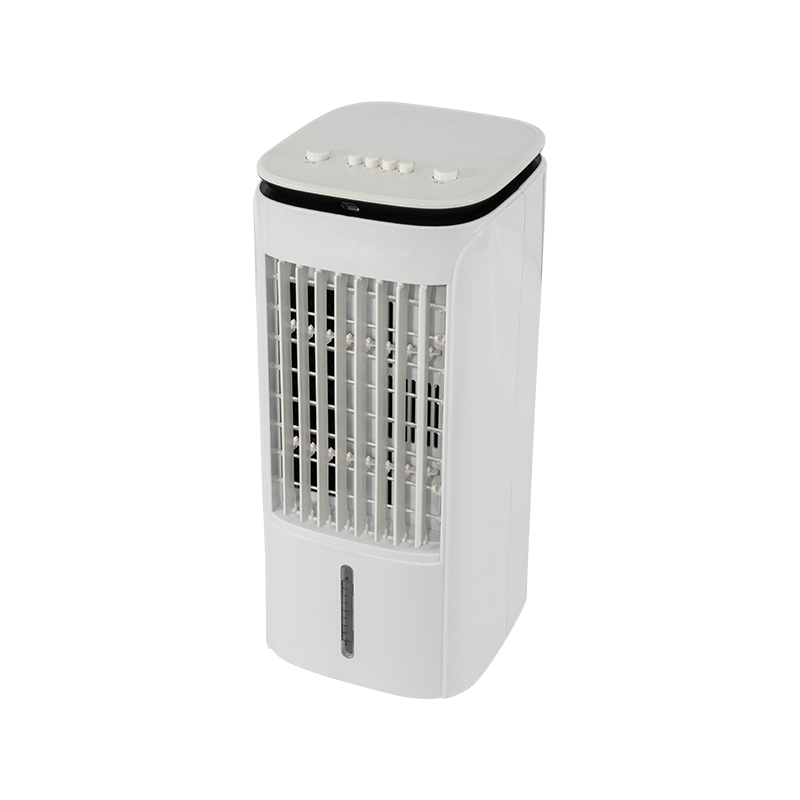
At its core, the Commercial Air Cooler Floor Standing Air Conditioner operates on the simple yet powerful principle of evaporative cooling. When water evaporates, it absorbs heat from its surroundings, resulting in a temperature drop. This phenomenon is the same one that makes a breeze feel cooler when it passes over a wet surface. In a commercial air cooler, this process is engineered and amplified to deliver consistent, large-scale cooling.
Core Components
- High-efficiency evaporative cooling pads
- Powerful axial or centrifugal fans
- Water distribution system with pump
- Water reservoir and float valve
- Durable powder-coated steel housing
- Variable speed motor controls
Working Cycle
- Water pumped from reservoir to distribution header
- Water flows evenly over cooling pads
- Fan draws warm ambient air through saturated pads
- Heat absorbed during evaporation cools the air
- Cooled air discharged into the space
- Continuous cycle maintains consistent output
The effectiveness of this system depends on several key factors. The cooling pads must maintain optimal saturation to maximize surface area for evaporation. The fan must generate sufficient airflow to overcome the static pressure of the pads while delivering high-velocity cooled air to the target zone. The water quality directly impacts pad longevity and cooling efficiency, with hard water requiring periodic descaling to prevent mineral buildup.
Compared to traditional air conditioning, which relies on energy-intensive compressors and chemical refrigerants, the evaporative approach consumes a fraction of the electricity while using water as the primary cooling medium. This fundamental difference translates into lower operational demands and reduced environmental impact, making these units particularly attractive for facilities seeking to reduce their carbon footprint without sacrificing comfort or productivity.
3. Diverse Applications Across Industries
The versatility of the Commercial Air Cooler Floor Standing Air Conditioner is evident in its wide range of applications across various industrial and commercial sectors. Each environment presents unique challenges that these units are specifically designed to address.
In manufacturing environments, these air coolers combat the intense heat generated by machinery, welding operations, and industrial processes. By providing spot cooling or area-wide temperature reduction, they help maintain comfortable working conditions that support both employee well-being and product quality. Warehouse operations benefit from the ability to cool large volumes of space without the expense of installing ducted HVAC systems, with units strategically positioned to create cooling islands in high-traffic areas.
Commercial kitchens present unique challenges due to the combination of high heat output from cooking equipment and the need for fresh air exchange. Floor-standing air coolers deliver a steady stream of cooled, filtered air that helps reduce ambient temperatures while also improving air quality by capturing grease and particulate matter. In agricultural settings, these units support optimal growing conditions by maintaining temperature and humidity levels within specific ranges, directly impacting crop yield and quality.
4. Performance Metrics and Efficiency Factors
Evaluating the performance of a Commercial Air Cooler Floor Standing Air Conditioner requires understanding several key metrics that collectively determine its effectiveness in a given application. These parameters help facility managers select the appropriate unit size and configuration for their specific needs.
| Performance Metric | Description | Typical Range |
|---|---|---|
| Airflow Volume | Total air moved per unit time | 3,000 – 30,000 CFM |
| Cooling Capacity | Temperature reduction capability | 8 – 15 °C differential |
| Coverage Area | Effective cooling zone per unit | 100 – 500 m² |
| Water Consumption | Evaporative water usage rate | 5 – 30 L/hour |
| Power Input | Electrical consumption | 0.5 – 5 kW |
| Noise Level | Operational sound output | 55 – 75 dB(A) |
Airflow volume, measured in cubic feet per minute (CFM), directly correlates with the unit's ability to circulate cooled air throughout the space. Higher CFM ratings are suitable for larger areas or spaces with high heat loads, while lower ratings may suffice for smaller workshops or targeted cooling applications. The cooling capacity, expressed as the temperature differential between incoming and outgoing air, depends on ambient humidity levels — drier air allows for greater evaporative cooling effect.
Coverage area calculations should consider not only the square footage of the space but also ceiling height, insulation levels, and heat-generating equipment. The water consumption rate impacts operational logistics, with larger units requiring more frequent refilling or connection to a continuous water supply. Power input remains remarkably low compared to compressor-based systems, with typical units consuming less than 2 kW while delivering cooling equivalent to systems drawing 10–15 kW.
5. Strategic Placement for Optimal Airflow
Maximizing the effectiveness of a Commercial Air Cooler Floor Standing Air Conditioner depends significantly on proper placement and airflow management. Strategic positioning ensures that cooled air reaches the intended areas while minimizing energy waste and optimizing comfort conditions.
Identify High-Temperature Zones
Survey the facility to locate areas with the greatest heat accumulation, such as near machinery, ovens, or large windows. Position units to direct airflow toward these hotspots for maximum impact.
Consider Airflow Path
Plan the trajectory of cooled air to ensure it flows across the space without obstruction. Avoid placing units directly against walls or in corners that restrict intake and discharge efficiency.
Utilize Cross-Ventilation
Where possible, position units to work with natural airflow patterns, using open doors or windows to exhaust warm air and maintain a positive pressure of cooled air in the work zone.
Adjust for Seasonal Changes
Reassess placement as seasons change and operational conditions evolve. Mobile units offer the flexibility to relocate cooling exactly where it is needed most at any given time.
For facilities with multiple units, spacing and coordination become critical factors. Units should be arranged to create overlapping cooling zones that cover the entire occupied area without creating dead zones or unnecessary redundancy. The discharge angle and height of the air outlet can be adjusted on many models to direct airflow upward, downward, or horizontally, allowing fine-tuning to match specific space configurations.
Consideration should also be given to the intake side of the unit. Ensuring unobstructed access to ambient air allows the fan to operate at peak efficiency, while positioning units away from sources of dust, debris, or moisture helps maintain pad integrity and cooling performance over time.
6. Maintenance Practices for Extended Service Life
Regular maintenance is essential to preserve the performance and longevity of any Commercial Air Cooler Floor Standing Air Conditioner. A well-maintained unit operates efficiently, delivers consistent cooling, and avoids costly breakdowns during critical operational periods. The following practices form the foundation of a comprehensive maintenance program.
Daily Checks
- Inspect water level in reservoir
- Check for unusual noise or vibration
- Verify fan operation and airflow output
- Look for visible leaks or drips
Weekly Tasks
- Clean or replace cooling pads as needed
- Remove debris from intake grilles
- Inspect water distribution system
- Check belt tension and alignment
Monthly Procedures
- Drain and clean the water reservoir
- Flush the water distribution lines
- Inspect electrical connections and controls
- Lubricate motor bearings if applicable
Seasonal Service
- Complete system inspection and testing
- Replace cooling pads and belts
- Clean internal components thoroughly
- Calibrate controls and sensors
Water quality plays a significant role in maintenance requirements. Hard water with high mineral content accelerates scale buildup on cooling pads and distribution components, reducing efficiency and requiring more frequent cleaning. Installing a water treatment system or using scale inhibitors can extend pad life and maintain cooling performance between service intervals. The frequency of pad replacement depends on water quality, usage hours, and environmental conditions, with most commercial applications requiring replacement at least once per cooling season.
Documenting maintenance activities helps track unit performance over time and identify emerging issues before they escalate into major failures. Maintaining a log of temperatures, airflow measurements, and water consumption provides valuable data for optimizing operational parameters and scheduling preventive interventions.
7. Environmental Benefits and Sustainable Cooling
The environmental advantages of Commercial Air Cooler Floor Standing Air Conditioner systems extend far beyond energy savings. These units embody a sustainable approach to climate control that aligns with global efforts to reduce greenhouse gas emissions and minimize ecological impact.
Water as Coolant
Using water as the primary cooling medium eliminates the need for synthetic refrigerants with high global warming potential. This natural approach avoids the risks associated with refrigerant leakage and disposal.
Reduced Power Demand
Evaporative cooling consumes significantly less electricity than compression-based systems, with typical energy savings ranging from 60% to 80%. This reduction directly decreases the carbon footprint of facility operations.
Minimal Waste Generation
The primary consumable components — cooling pads and water — are biodegradable and recyclable. This contrasts with the complex disposal requirements of refrigerant-based systems.
Improved Air Quality
By drawing fresh air through saturated pads, these units naturally filter out dust and particulate matter, contributing to healthier indoor environments without the need for additional filtration systems.
Lifecycle assessments of evaporative cooling systems consistently demonstrate lower overall environmental impact compared to conventional alternatives. The manufacturing process requires fewer resources, the operational phase consumes less energy, and the end-of-life disposal involves materials that are easier to recycle or safely discard. Facilities implementing these systems often report improved sustainability metrics and enhanced corporate environmental stewardship credentials.
The integration of Commercial Air Cooler Floor Standing Air Conditioner technology into green building certifications provides an additional pathway for organizations committed to sustainable design and operations. These systems contribute to points in categories such as energy efficiency, indoor environmental quality, and innovation, supporting comprehensive sustainability goals without compromising cooling performance.
8. Technological Advancements in Modern Units
Contemporary Commercial Air Cooler Floor Standing Air Conditioner systems benefit from a wave of technological innovations that enhance their performance, usability, and integration with modern facility management systems. These advancements reflect the broader trend toward smart, connected equipment that delivers superior results with minimal operator intervention.
Intelligent Controls
Modern units feature microprocessor-based controllers that monitor ambient conditions, adjust fan speed and water flow, and optimize cooling output based on real-time temperature and humidity readings. Programmable schedules allow automated operation aligned with occupancy patterns.
Remote Monitoring
Wireless connectivity enables facility managers to monitor performance, adjust settings, and receive alerts from any location via smartphone applications or web-based dashboards. This capability supports proactive maintenance and rapid response to operational anomalies.
Variable Speed Technology
Advanced motor drives allow precise control over airflow and cooling output, matching capacity to demand for optimal efficiency. This technology reduces energy consumption during partial-load conditions and extends component service life.
Self-Diagnostic Systems
Built-in diagnostics continuously assess unit health, detecting issues such as low water flow, pad degradation, or motor anomalies before they affect performance. Clear fault indicators simplify troubleshooting and repair.
Material science has also contributed to performance improvements, with cooling pads now available in a range of materials optimized for specific water types and operating conditions. Cellulose-based pads offer excellent water retention and cooling efficiency, while synthetic options provide enhanced durability and resistance to biological growth. The housings of modern units feature corrosion-resistant coatings and improved thermal insulation, ensuring reliable operation in demanding industrial environments.
The convergence of these technologies positions the Commercial Air Cooler Floor Standing Air Conditioner as a smart, capable solution that meets the complex demands of contemporary commercial operations. As the Internet of Things (IoT) continues to expand, the integration of these units into broader building automation systems becomes increasingly seamless, enabling coordinated climate management that optimizes comfort, energy use, and operational efficiency across entire facilities.
9. Frequently Asked Questions
What is the maximum temperature reduction achievable with a Commercial Air Cooler Floor Standing Air Conditioner?
How often should cooling pads be replaced in a commercial environment?
Can a floor-standing air cooler be used in enclosed spaces without external ventilation?
What maintenance is required for the water distribution system?
Is a Commercial Air Cooler Floor Standing Air Conditioner suitable for use in coastal or high-humidity regions?
10. Conclusion
The Commercial Air Cooler Floor Standing Air Conditioner represents a compelling solution for businesses seeking effective, sustainable, and practical cooling for large spaces. Its reliance on the natural process of evaporative cooling delivers substantial temperature reductions while consuming a fraction of the energy required by conventional air conditioning systems. The versatility of these units spans a wide range of applications, from manufacturing plants and warehouses to commercial kitchens and outdoor events, demonstrating their adaptability to diverse operational requirements.
Throughout this comprehensive exploration, we have examined the fundamental principles that govern evaporative cooling, the key components that define system performance, and the strategic considerations that maximize effectiveness. The environmental benefits are clear, with lower energy consumption, absence of chemical refrigerants, and reduced overall carbon footprint positioning these units as an eco-conscious choice for forward-thinking organizations. Technological advancements continue to enhance functionality, with smart controls, remote monitoring, and variable speed drives elevating the user experience and operational capabilities.
Proper placement and regular maintenance remain essential to realizing the full potential of these systems. By understanding the factors that influence performance and implementing best practices for care and operation, facility managers can ensure reliable, efficient cooling year after year. The return on operational investment manifests not only in immediate comfort improvements but also in long-term sustainability gains and enhanced working environments.
As industries continue to evolve toward greener, more efficient operations, the role of evaporative cooling technology will only expand. The Commercial Air Cooler Floor Standing Air Conditioner stands at the forefront of this movement, offering a proven, reliable, and environmentally responsible approach to industrial and commercial climate control. By embracing this technology, businesses can achieve their cooling objectives while contributing to a more sustainable future.